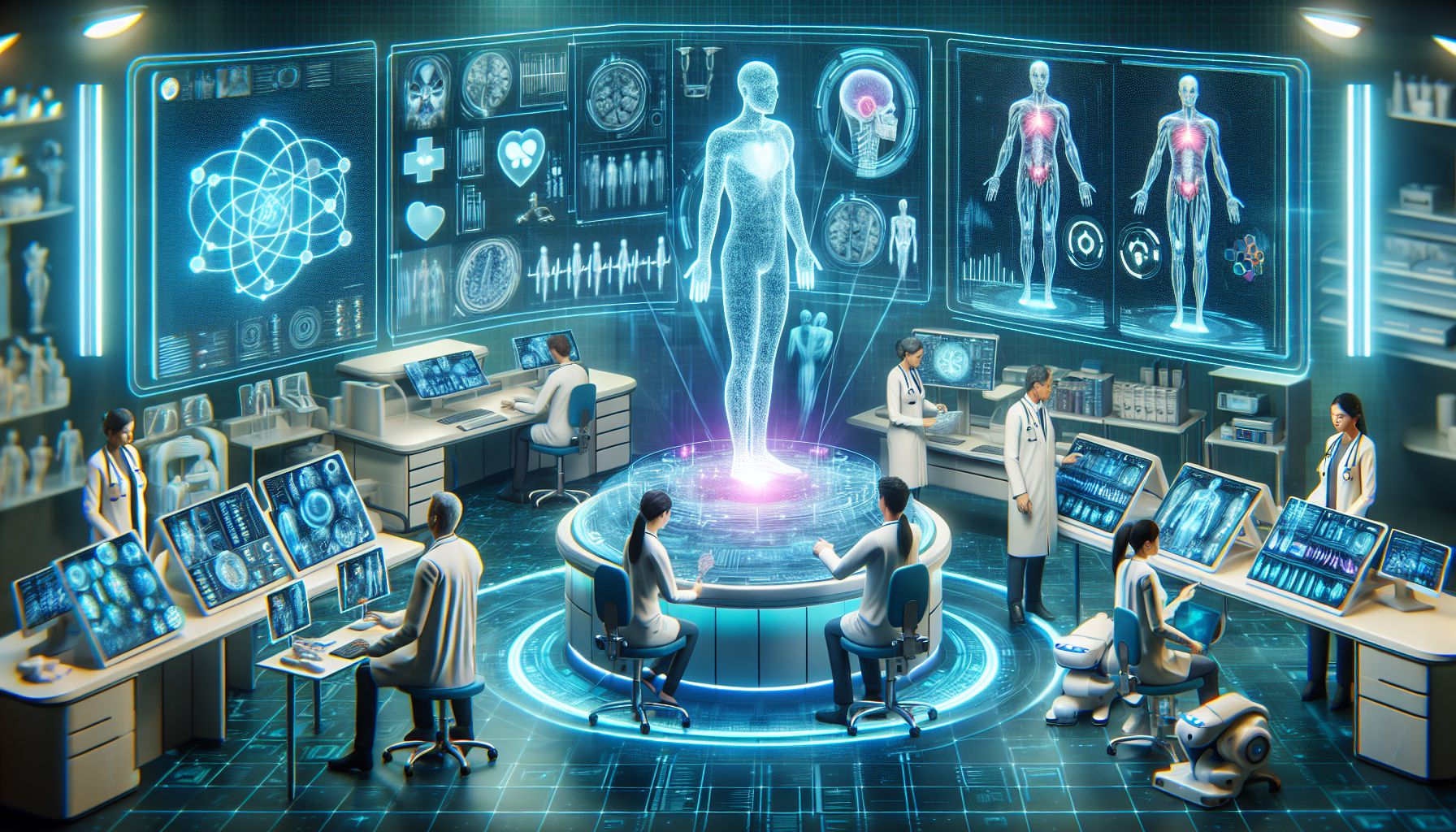
Welcome to our latest news edition, a place where every science enthusiast gets their daily dose of scientific breakthroughs. Modern medicine and artificial intelligence have taken a step towards a future where computers and algorithms can predict, diagnose, and even treat many human diseases. We uncover the transformation that AI is triggering in medicine and healthcare industry.
Surge of AI in the Medical Sphere
For decades, medicine has been a field led by human doctors and healthcare professionals. Experts in this sector constantly learn, adapt, and evolve based on news studies, discoveries, and advancements. However, the last decade has witnessed an unprecedented shift with the emergence of artificial intelligence (AI).
AI, with its data-driven approach and analytical capabilities, is making waves in the medical arena. Algorithms are now able to analyze massive amounts of information — from electronic health records to genomics — opening up new possibilities for the diagnosis, treatment, and management of diseases.
AI for Disease Diagnosis
The capabilities of AI in disease diagnosis are transforming the face of modern medicine. Radiologists, for instance, are beginning to utilize AI algorithms to scan and interpret imaging data with more precision and speed.
Take Google’s AI model for detecting breast cancer, as an example. This learning algorithm can pinpoint the disease from mammograms with more accuracy than human experts. As per news, this model was trained on a diverse dataset and reduces both false positives and negatives.
Another news-worthy application is AI’s potential in diagnosing skin cancer. Researchers have trained a machine learning model to identify the deadliest form of skin cancer, malignant melanoma, with remarkable accuracy similar to that of expert dermatologists.
AI in Personalized Treatment Plans
Beyond diagnostics, AI is also playing a prominent role in creating personalized treatment plans for patients. By combing through the sea of biomedical data, AI algorithms can map the unique genetic makeup of a patient, identify disease signatures, and suggest targeted treatments.
In oncology, the IBM Watson AI platform has garnered news for its ability to suggest personalized cancer treatment plans, having an extensive repository of clinical research, case studies, and patient health profiles.
Future of AI in Medicine
The future of AI in medicine is remarkably promising. AI’s potential to improve telemedicine could create a seamless healthcare experience for patients, especially amidst global health crises like the COVID-19 pandemic.
AI’s potential in drug discovery and development is also worth making headlines. Using AI, researchers can screen thousands of potential drug compounds in record time, thereby shortening the drug development timeline.
While the benefits of AI in medicine are substantial, it is essential to note that AI is not replacing health professionals but augmenting their capabilities. There is still no replacement for a doctor’s professional judgment, experience, and human touch.
Concluding Thoughts
In sum, AI is accelerating progress in modern medicine. It’s reshaping disease diagnosis, treatment plans and can potentially expedite drug development. So, whether you’re a healthcare professional striving to deliver better patient care or a tech enthusiast inspired by AI-abled advancements, there’s no denying that AI is making groundbreaking strides.
By embracing AI, the medical world stands on the cusp of a transformation that centers on saving lives and enhancing human health. However, this development should not be seen as a threat to medical professionals but rather as a tool to help them deliver more accurate, personalized, and effective healthcare.
Stay tuned to our platform for more news and exciting insights into the world of science and technology.