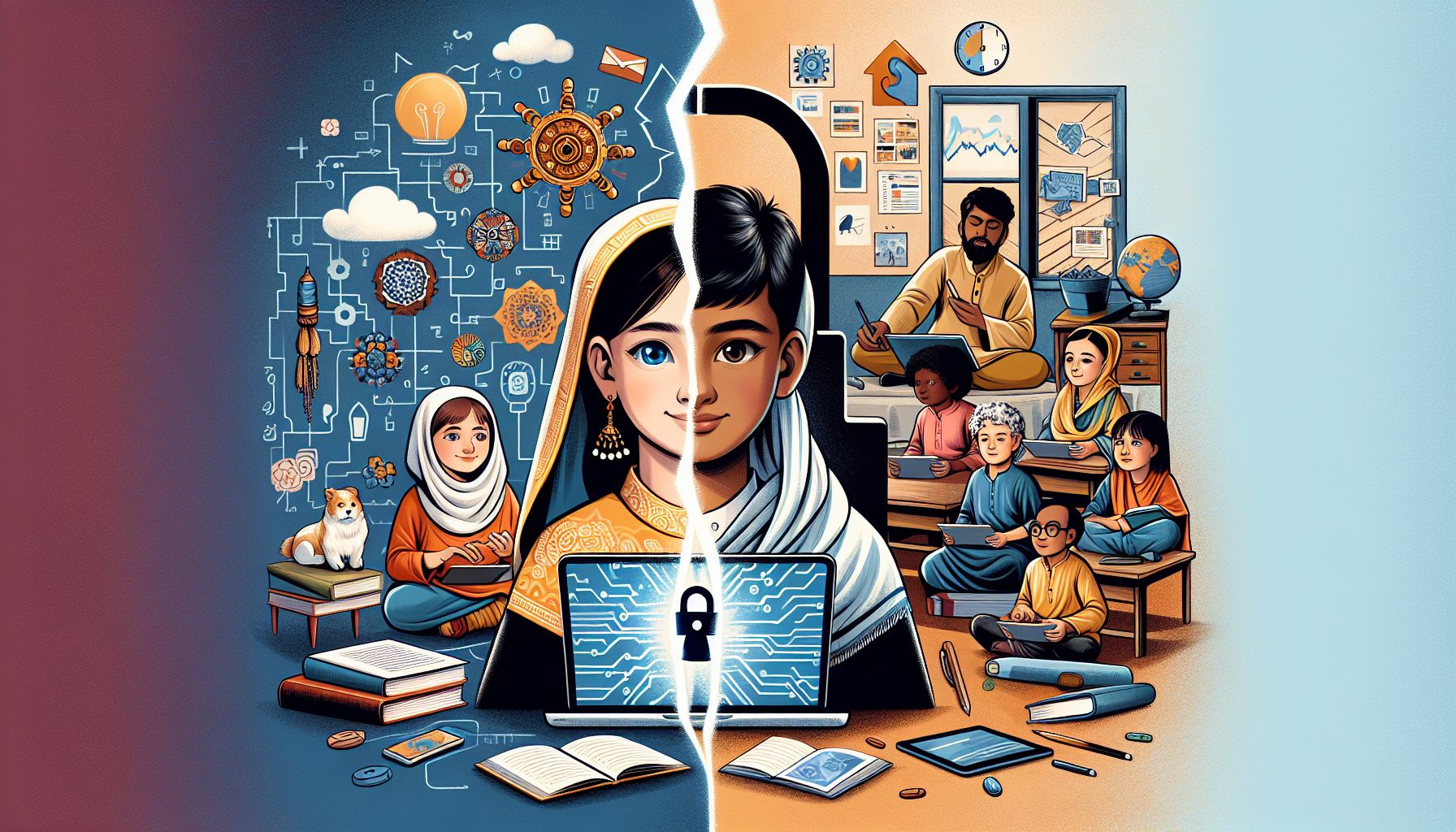
As the world shifts to an increasingly digital lifestyle, the necessity for robust and reliable internet connectivity has never been greater. This need is especially felt in the realm of education, where a digital divide threatens to leave some students at a disadvantage. Today, we take a look at the state of online learning and how we can address the prevalent digital divide.
Digital Divide and Online Learning
The digital divide, as defined by the Oxford Dictionary, is “the gap between those who have ready access to computers and the internet, and those who do not.” As we transition to digital platforms for work, education, and entertainment, this gap isn’t just a matter of convenience—it’s a matter of accessibility and opportunity.
This issue becomes incredibly salient when viewed in the context of education, specifically online learning. For students with limited internet access or those who live in remote areas, the shift to online learning can pose significant challenges. This digital disparity can lead to lower educational outcomes, less engagement in school, and potential long-term disadvantages in students’ career paths.
The pandemic has only highlighted and accelerated this issue. With school closures and the rapid shift to online learning, those on the wrong side of the digital divide were thrust into a challenging situation almost overnight. However, it’s not all doom and gloom; the growing awareness of this issue has spurred on efforts to bridge the digital gap in education.
Embracing Technology as our Ally
While technology may be seen as the cause of the digital divide, it can also be part of the solution. For example, [news about tech company’s efforts] shows how the tech industry is rising to the challenge. Schools and educational institutions have also been leveraging different digital platforms to provide learning materials and multi-modal teaching methods to reach their students better.
Moreover, companies like Google are actively taking steps to minimise this disparity with projects like Google Station, which aims to provide free Wi-Fi in public spaces in underprivileged regions. Similarly, Elon Musk’s Starlink hopes to offer cheap, fast internet to remote parts of the world, potentially offering an alternative to traditional broadband.
Aside from internet connectivity, the availability of devices for online learning is another barrier to entry. In response, some tech companies have developed low-cost, user-friendly devices specifically aimed at students and teachers. For example, Amazon’s Kindle Kids Edition provides an affordable e-reader option loaded with a treasure trove of educational materials.
Closing the Gap Together
Addressing the digital divide isn’t solely on the shoulders of tech giants; it requires the involvement of governments, communities, and educators. Government initiatives, such as the rollout of broadband networks in rural areas, are crucial in ensuring every student has access to reliable internet. Teachers and educators also play a significant role, from harnessing digital teaching tools, communicating effectively with students online, and offering offline resources where necessary.
Conclusion
In short, the digital divide poses a serious challenge to online learning, but it’s a hurdle we can overcome together. Through collaboration between tech companies, governments, and educators, we have the opportunity to unlock the full potential of online learning and provide equal educational opportunities to all, regardless of their digital access.
The current landscape paints a picture of disparity, but by acknowledging this gap and taking proactive measures, we can transform it into a canvas depicting a promising, digital-inclusive future for education. As the saying goes, it takes a village (or in this case, the whole world) to raise a child – and in the digital age, that means ensuring each child has the same chance to participate fully in online learning.