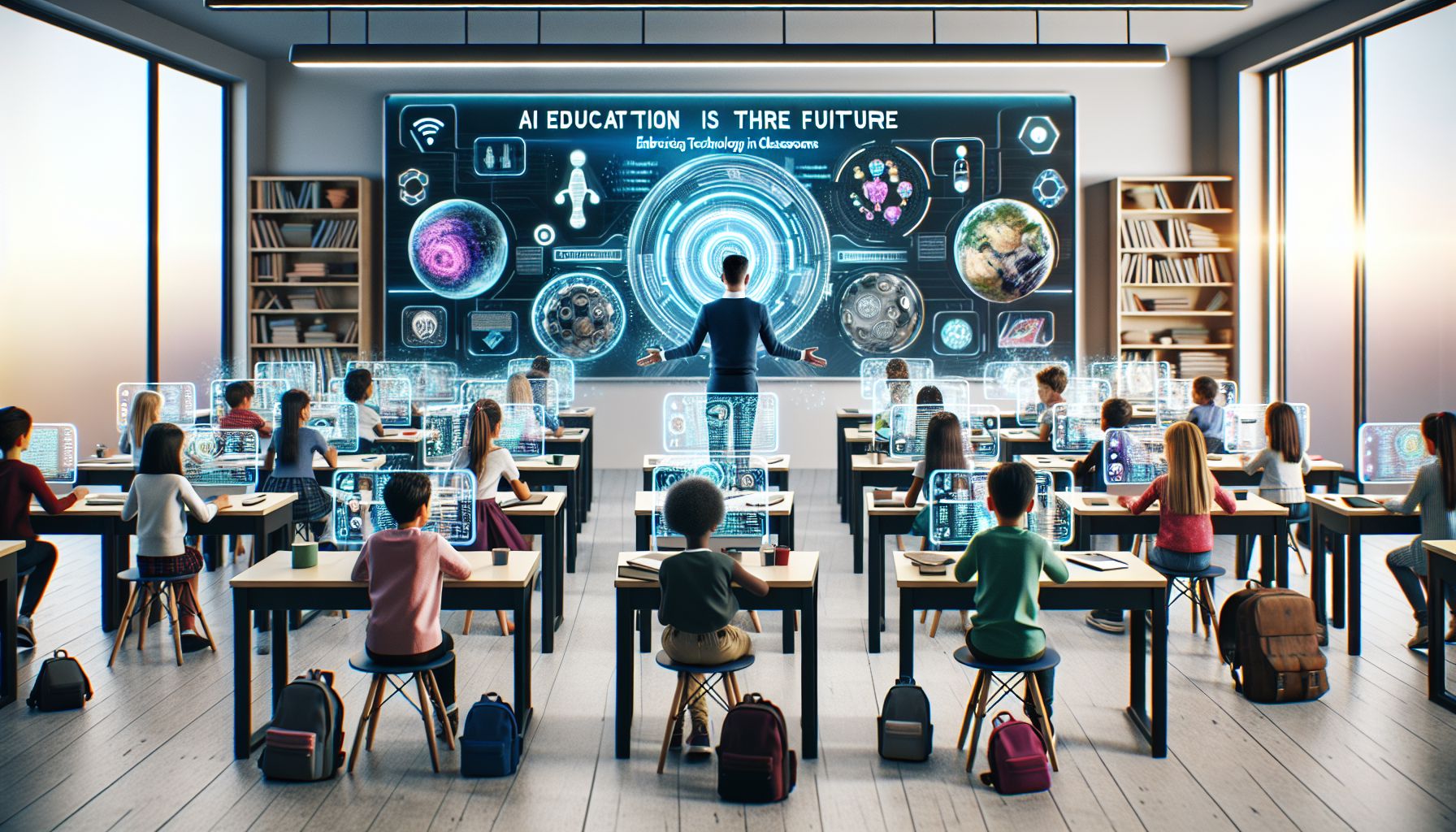
Today, let’s turn our attention to a growing trend in education – AI education. In a world that is becoming increasingly reliant on AI (Artificial Intelligence) and ML (Machine Learning), education systems worldwide have started to adapt and incorporate these innovative technologies in their curriculum.
Subheading: The Rise of AI Education
AI education is not just about programming and coding. It includes teaching students about the ethical, philosophical, and societal implications of AI. As our global society becomes more intertwined with AI and ML, it is crucial for individuals to fully comprehend these technologies, their potential impact on the world, and how to use them responsibly.
The International Society for Technology in Education (ISTE) recognizes the importance of AI in the modern world. Therefore, it has championed AI education and encourages educational institutions to integrate AI and machine learning technologies into their curriculum. As a result, more schools globally are now offering lessons related to AI, prompting a thorough shift in how educational content is delivered.
Subheading: Embracing AI in the Classroom
There is no doubt that AI is disrupting traditional education. AI-based educational tools and software are already transforming the learning experience, making it more personalized, interactive, and exciting. Machine Learning algorithms can adapt to individual learning styles and paces, enhancing the learning efficiency of each student.
The benefits of integrating AI in the classroom are numerous. AI can help teachers save time by automating administrative tasks, grading assignments, and providing feedback to students. Furthermore, AI-powered teaching aids can tailor instructions to a student’s specific abilities and learning styles, resulting in a more effective instructional approach.
Subheading: Overcoming the Challenges
However, the transition to AI education is not without challenges. The first hurdle is the lack of resources and knowledge. To teach AI, teachers need to be fully equipped with the necessary skills to convey complex topics to their students.
Another challenge is the digital divide that can lead to an AI education gap. Not all students have equal access to technology, let alone advanced AI tools and software. Therefore, ensuring equal opportunities for all students to learn about AI becomes paramount.
Subheading: The Future of AI Education
Despite these challenges, the future of AI education is bright. Technologies are evolving rapidly, and with it, our understanding of AI and ML. As more schools adopt AI education, the pedagogical approaches are also evolving to ensure that the learning process remains effective and engaging for students.
Moreover, as AI becomes more ingrained in our daily life and work, the demand for AI literacy will only continue to rise. Employers across sectors are already prioritizing candidates with AI and ML knowledge, indicating that AI education is not just a trend, but a necessity.
Conclusion: Embracing the Future
AI education is truly the future. It’s inevitable that sooner or later, AI and ML will become standard components of education worldwide. By embracing AI in the classroom, we can prepare our future generations for the digital era. The challenges are real, but they are not insurmountable. With careful planning and strategic investment in teacher training and resources, we can ensure that all students, irrespective of their background or means, have the opportunity to learn about and benefit from this transformative technology.
AI education is all about empowering students with the knowledge and skills they need to thrive in our tech-driven world. In a society where AI is increasingly prevalent, it is more important than ever to ensure that our youth are well-versed in the intricacies of artificial intelligence and machine learning. Let’s embrace the future and ensure that AI education becomes a global norm.